
That common mix-up happens all the time—because of its cinematic scale, high-concept plotting, and tight 13-episode run, many people mistake Debris for a feature film or a miniseries.
In reality, Debris was a sci-fi television series that aired on NBC in 2021. Created by J.H. Wyman (the genius writer and showrunner behind the cult-classic hit Fringe), it played out like a massive, serialized movie broken into weekly chapters.
If you are looking at the core identity of the show, here is the breakdown of what Debris actually is, how its mythology works, and what made it so unique in the modern sci-fi landscape.
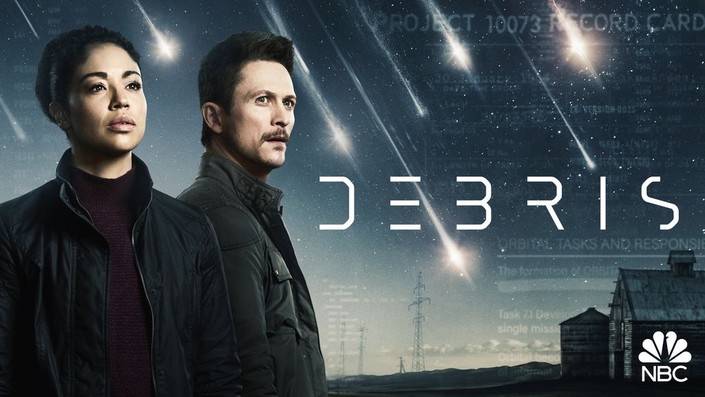
The Conceptual Core: Alien Invasion via “Junk”
Most sci-fi stories give us a grand first-contact moment—spaceships hovering over cities, alien ambassadors, or a direct declaration of war. Debris completely flips this trope on its head.
In this world, an alien spacecraft was destroyed in deep space, and for six months, its fragmented wreckage has been randomly drifting down through Earth’s atmosphere.
Humanity never gets a formal introduction to the extraterrestrials. Instead, we are left to deal with their garbage.
The catch is that these fragments aren’t just pieces of metal; they possess god-like, reality-warping technology that interacts directly with human physics, environments, and even human emotions.

The Two Fronts: How the Story Moves
The narrative follows a classic X-Files structural split, balancing weekly reality-bending investigations with a deep, overarching conspiracy.
1. The Investigative Front (Orbital Task Force)
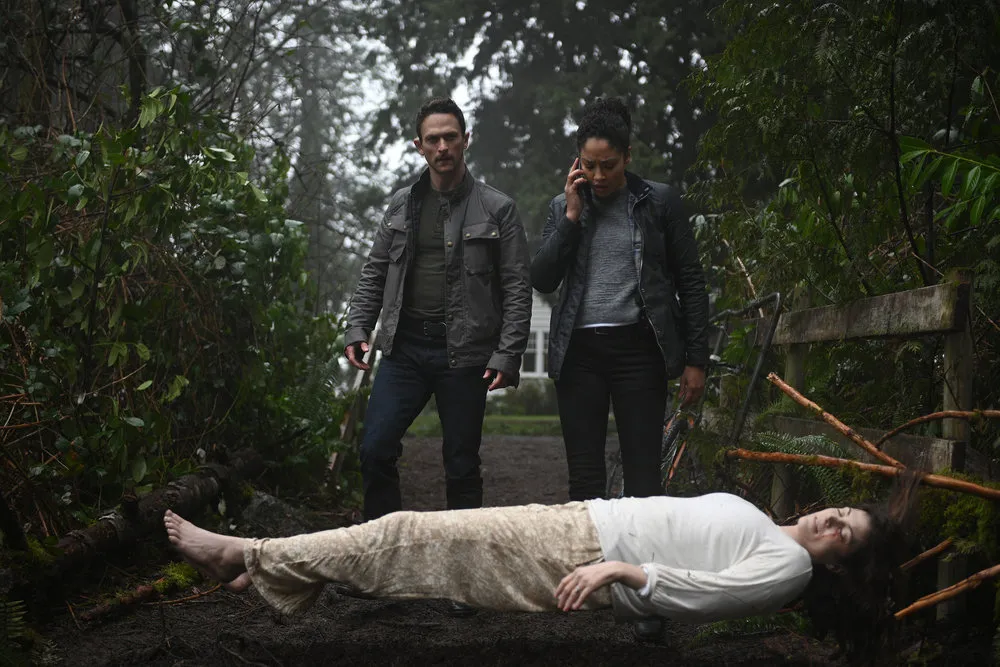
To handle the crisis, an international coalition forms Orbital—a secret joint task force. The story centers on two agents with radically different perspectives who are forced to partner up:
- Bryan Beneventi (Jonathan Tucker): An American CIA operative and combat veteran. He views the debris through a lens of trauma and threat assessment—it’s a dangerous weapon that needs to be contained.
- Finola Jones (Riann Steele): A British MI6 operative whose late father was the leading scientist studying the wreckage. She views the pieces with empathy and wonder, believing the technology is trying to communicate a deeper universal truth.
2. The Mythology Front (The Influx Conspiracy)
As the series progresses, the scope expands into a global shadow war against a radical extremist group called Influx. While the government wants to lock the debris away in secure labs, Influx believes this technology belongs to the world. They use the reality-warping pieces to execute massive terror plots, aiming to erase international borders, collapse world economies, and force humanity into a chaotic evolutionary leap.
The Anomalies: Emotional Sci-Fi
What earned Debris critical praise was how it used hard sci-fi concepts as a mirror for human grief and psychology. The pieces of the ship don’t just cause random glitches; they reshape reality based on human thoughts.
- The Clone Loop: One piece creates perfect physical replicas of a man over and over again, with each clone losing its memory and dying—a physical manifestation of identity loss and isolation.
- The Dimensional Pocket: Another fragment tears open a hidden, two-dimensional window in a field, trapping local teenagers in a parallel space where they can see our world but can never touch it.
- The Chlorine Rain: A piece begins actively terraforming a rural farm, shifting the atmospheric composition so that the local workers mutate to breathe chlorine, making them incompatible with the rest of the planet.
Why It Ended Prematurely
Despite its cinematic visuals and dense, rewarding lore, NBC canceled Debris after its first season due to low traditional network ratings. Because it was an intellectual, atmospheric “slow burn” that required viewers to pay close attention to interlocking mysteries, it struggled to find a massive, immediate broadcast audience.
It remains a highly regarded hidden gem in the sci-fi community—offering a complete, mind-bending 13-episode story arc that treats alien contact as something beautifully complex, terrifying, and deeply human.