
Scattered Pieces, Broken Realities: Why the Sci-Fi Masterpiece Debris Deserved So Much More
If you are a sci-fi purist, you know the exact, heartbreaking feeling of finding a brilliant show, falling head-over-heels for its mythology, and watching it get brutally cut short before it can truly fly.
That is exactly what happened with Debris.
Created by J.H. Wyman—the brilliant mind behind the cult-classic Fringe and Fox’s Almost Human—Debris arrived as a high-concept, atmospheric sci-fi thriller. It blended the monster-of-the-week charm of The X-Files with a deeply emotional, reality-bending lore. Though it only ran for a single, 13-episode season on NBC before its untimely cancellation, it left an indelible mark on the genre.
Here is a deep dive into the mind-bending premise, the complex characters, and the cosmic philosophy that made Debris an absolute masterpiece of modern television.
The Premise: When the Universe Leaves Its Trash on Our Lawn
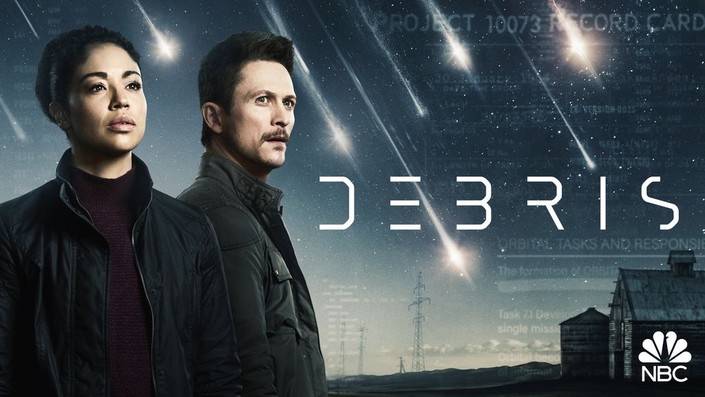
The core hook of Debris is beautifully simple yet infinitely complex: Six months ago, a destroyed alien spacecraft drifted into Earth’s orbit.
Instead of a formal first-contact landing, humanity experiences alien life through junk. Fragmented shards of this destroyed vessel are constantly falling through the atmosphere, scattering randomly across the Western Hemisphere.
                       [ Destroyed Alien Vessel ]
                                   │
       ┌───────────────────────────┼───────────────────────────┐
       ▼                           ▼                           ▼
[ Piece A: Clones ]       [ Piece B: Pocket Dimensions ] [ Piece C: Terraforming ]
       │                           │                           │
       └───────────────────────────┼───────────────────────────┘
                                   ▼
                   [ The Human Emotional Impact ]
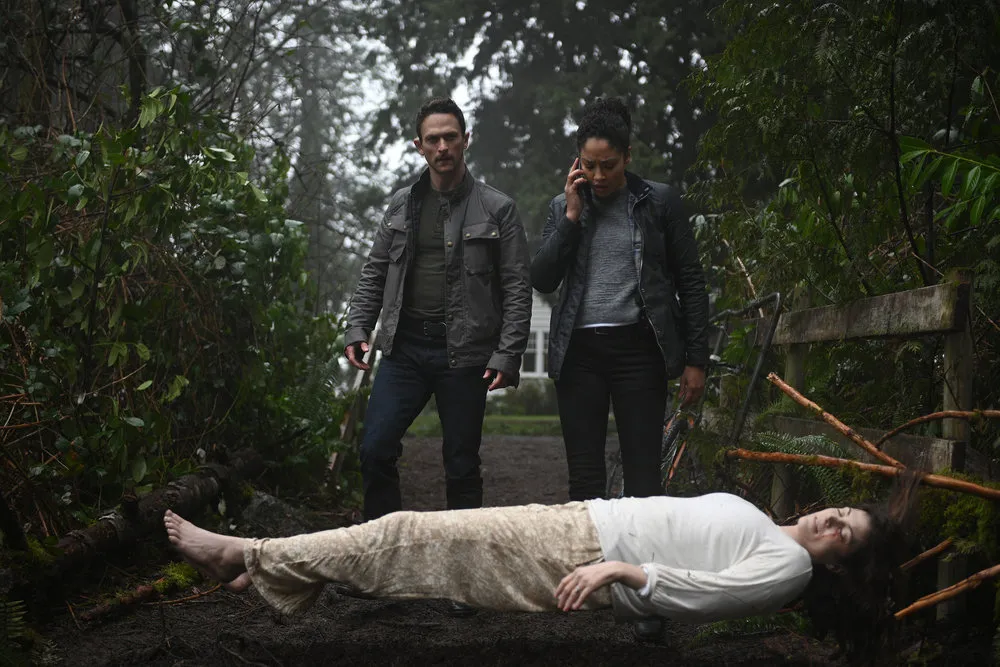
These aren’t just chunks of metallic space-metal. Every single piece of “debris” possesses its own unpredictable, reality-warping physics. One piece might manifest a grieving mother’s dead son by extracting her memories. Another might tear a hole into a pocket dimension, trapping unsuspecting teenagers. A third piece might instantly terraform a farm, altering the atmosphere so that humans can only breathe chlorine.
Because these fragments are essentially god-like technology dropped into human hands, an international coalition forms Orbital—a secretive task force designed to track, isolate, and recover the pieces before they can destroy human society or fall into the hands of black-market syndicates.
Fire and Ice: The Dynamic of Bryan and Finola
At the heart of the series is the partnership between two agents from entirely different worlds and psychological backgrounds. They are tasked with investigating these anomalies, and their chemistry drives the emotional weight of the show.

Bryan Beneventi (Jonathan Tucker)
Bryan is an American CIA operative and a former military man. He is guarded, cynical, and dealing with massive, buried post-traumatic stress from his time in combat. Bryan views the debris strictly as a threat—a volatile weapon that needs to be locked down. Jonathan Tucker plays Bryan with a tightly coiled, twitchy energy, hiding a deep-seated vulnerability beneath a hardened, mission-first exterior.
Finola Jones (Riann Steele)
Finola is a British MI6 operative, and her connection to the debris is profoundly personal. Her late father, George Jones, was the astrophysicist who first discovered the alien materials and began unlocking their secrets. Finola is empathetic, intuitive, and detail-oriented. Where Bryan sees a weapon, Finola sees a profound cosmic miracle. She believes the debris isn’t trying to hurt us; it’s trying to communicate with us.
The Episodic Brilliance: The Human Element of Sci-Fi
What made Debris special wasn’t just its high visual-effects budget; it was its commitment to emotional sci-fi. The alien technology in the show functions as a mirror to human trauma. The anomalies don’t just break the laws of physics—they exploit the cracks in the human psyche.
| Episode Focus | The Sci-Fi Anomaly | The Human Core / Emotion Explored |
| Grief as Power | A fragment suspends a field of gravity and creates a physical manifestation of a deceased boy. | It explores a mother’s absolute refusal to let go of her dead child, feeding the anomaly her own life force. |
| The Replica Loop | A piece creates multiple physical clones of a man, each version suffering from severe amnesia. | An exploration of identity, memory loss, and the tragic isolation of not knowing who you truly are. |
| The Chlorine Farm | A piece begins terraforming a rural area, changing the air to chlorine and mutating the local workers. | A heavy, somber look at survival, displacement, and the terrifying reality of becoming incompatible with your own home. |
Wyman used the “anomaly of the week” structure not just to show off cool sci-fi concepts, but to deep-dive into themes of isolation, loss, and connectivity. It asked a profound question: If a machine could grant your deepest, most agonizing wish, would you care if it destroyed the world around you?
The Overarching Lore: Influx and The Missing Scientist
As the season progressed, the narrative expanded far beyond episodic anomalies, weaving a massive conspiracy web that centered around three major pillars:
- Influx: A radical, shadowy extremist group. Unlike Orbital, which wants to contain and study the debris under government lock and key, Influx believes that this technology belongs to all of humanity. They want to use the pieces to dismantle borders, reset global power structures, and force a chaotic evolution on mankind.
- The Resurrection of George Jones: Finola spends the early part of the season mourning her father, only to discover a shattering truth—George Jones is alive. Or rather, he has been reassembled by the debris. Tyrone Benskin plays George with a brilliant, erratic intensity, portraying a man whose brain has been fundamentally rewired by cosmic intelligence.
- The Emotional Fabric: The show slowly hints that the alien ship didn’t crash by accident. The debris reacts directly to human thought, consciousness, and emotion. It is a technology built on a framework of connectivity, implying that the alien race operates on an entirely different evolutionary plane of shared consciousness.
“The debris isn’t changing our world. It’s showing us what our world actually is when you strip away the illusions of space and time.”
Why Debris Was Cancelled (And Why It Deserves Cult Status)
When NBC cancelled the show in May 2021 after its 13-episode run, the sci-fi community was devastated. The finale ended on an absolute cliffhanger that completely shifted the stakes of the series, introducing reality-hopping variants and a massive revelation about Bryan’s own mysterious past with the anomalies.
So, why didn’t it survive?
- The “Slow Burn” Curse: Debris was an intellectual, atmospheric show. It demanded patience. In a streaming era where audiences want instant answers, its deliberate pacing and philosophical tone didn’t immediately capture the mass network television audience.
- The Ghost of Fringe: Fans constantly compared it to Fringe. While Fringe had time to grow from a standard procedural into a sci-fi epic, Debris was cut down just as its overarching mythology was locking into place.
- Bad Timing: Launching mid-season in 2021 meant navigating pandemic-interrupted viewing schedules and a highly fractured television landscape.
Final Thoughts: A Fragment Worth Hunting Down
Debris is a tragic reminder of how fragile high-concept television can be. It was a show that treated alien intelligence not as green monsters with laser blasters, but as a beautiful, terrifying, and incomprehensible force of nature that shatters our understanding of reality.
If you love science fiction that makes you stare at the ceiling long after the credits roll, pondering the nature of grief, quantum physics, and human connection, Debris is a journey absolutely worth taking. It may only be a single, broken fragment of a larger story that we will never get to see fully realized, but even in its shattered form, it shines incredibly bright.